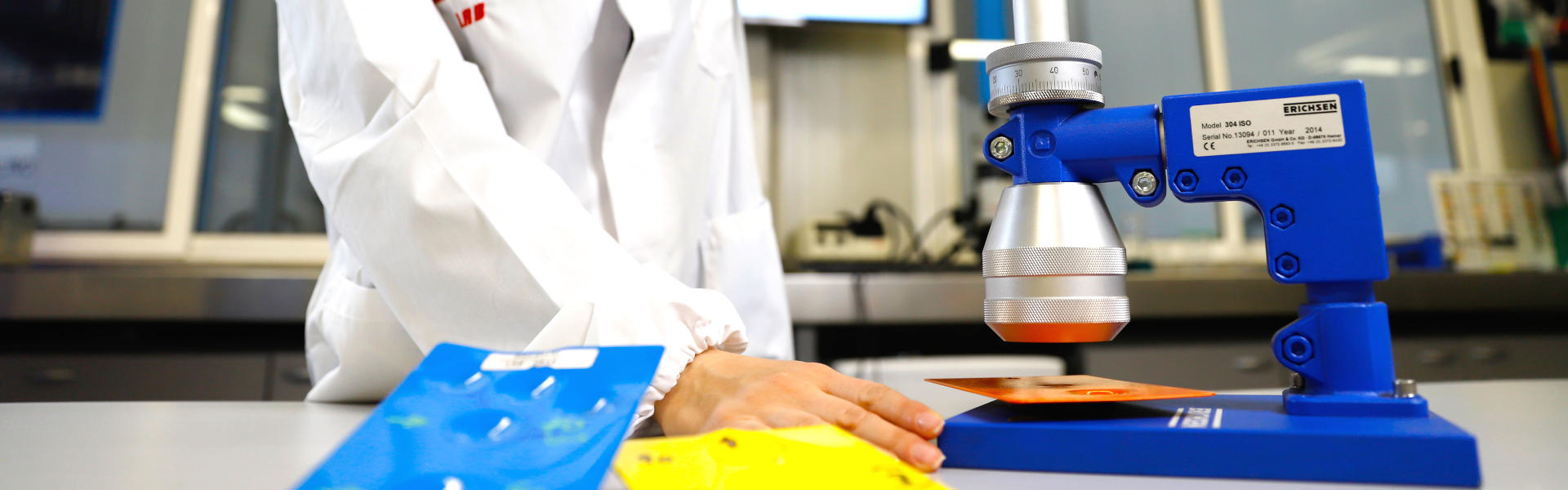
The impact resistance test makes it possible to evaluate the effects of impacts on painted surfaces, thus highlighting the flexibility of the paint and the potential cracks that will form.
Impact resistance tests prove extremely useful during painting because they measure the resistance of the coating to deformation, when a given load is applied rapidly.
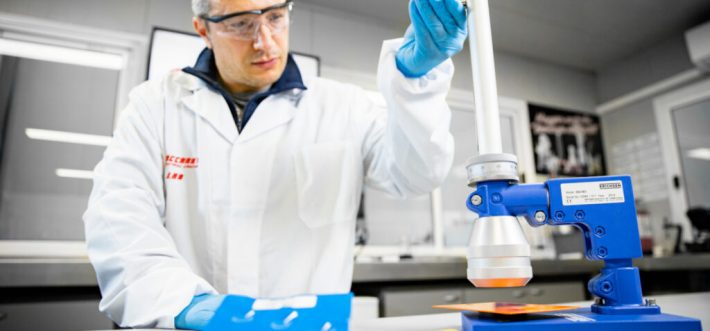
To carry out the test, a hemispherical weight is dropped onto the coated surface to be checked. The weight, guided by a rail, is dropped from ever greater heights until it causes the film to crack; the result will be expressed by the ratio between the starting height of the test that led to the breaking of the paint and the weight used to strike the surface.
The result is influenced by a series of characteristics, such as the thickness of the paint, the mechanical properties and the surface of the substrate.
The standard that governs the test is ISO 6272, which indicates the standard method for evaluating the resistance to breaking or detachment from the substrate of paints when subjected to a deformation caused by a falling mass with a 20 mm diameter spherical punch.