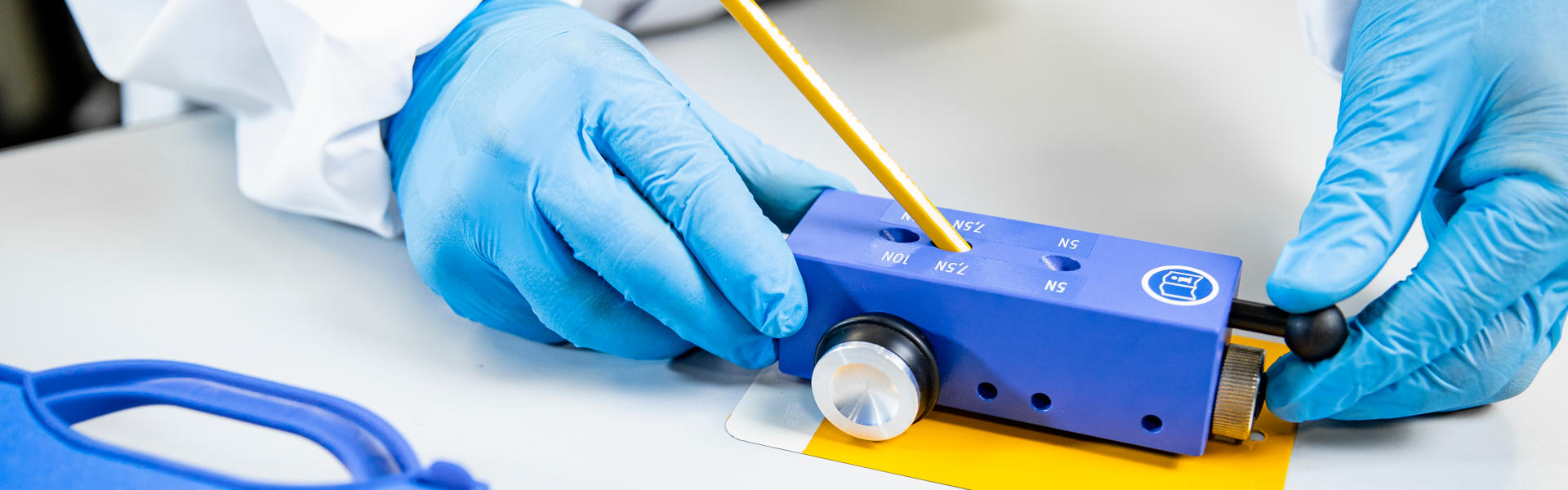
The surface hardness test according to Wilborn-Wolff makes it possible to evaluate the scratch resistance of coatings and paints.
The surface hardness test, also called the scratch resistance test, is carried out using the hardness of a pencil.
Pencil leads, which have a well-classified hardness ranging from 6B to 9H (a set of 17 pencils), act as a “thermometer” for the resistance of the coating.
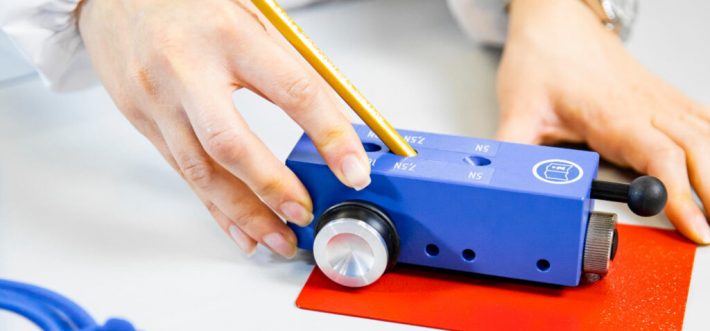
The pencil is inserted into a special instrument, simply called a scratch-hardness apparatus according to Wolff-Wilborn, which places it in a position with an inclination of 45°; at this point, the pencil is pressed onto the coating with a force just below that needed to break it.
The hardness and scratch resistance will then be indicated by the type of lead that does not damage the tested surface.
The standard that governs it is ISO 15184.