
Pre-treatment processes for painting: differences between degreasing and pickling
Contact usThe pre-treatment processes for painting are fundamental, because they allow you to have perfectly clean surfaces free from impurities; without their use excellent qualitative results could not be achieved. There are different types, each with its own characteristics: the difficulty lies in evaluating which is the best case by case. In the following article we will analyze two of the main surface preparation methods: degreasing and pickling.
Surface decontamination is a phase of the painting process that must not be underestimated: its use ensures that an article is perfectly capable of receiving a surface finishing treatment, avoiding possible negative repercussions caused by calamine, oils or oxides.
To complete this phase there are various methods, the main of which are degreasing and pickling. In the following article we will try to understand what these pre-treatments consist of and how they differ.
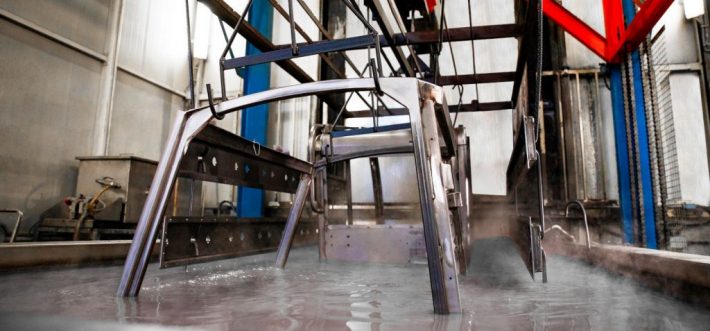
An article is immersed in our tank for alkaline degreasing
What is degreasing
Degreasing is a practice that involves the removal of grease, oil, grease and dirt from the metal surface. As anticipated, this is an essential moment in the search for treatment perfection: working on an impure surface would involve the application of a coating that is easily removable or does not adhere perfectly to the substrate. There are two types, solvent or aqueous.
Solvent degreasing
Solvent degreasing is a practice that involves the use of solvents to clean metal surfaces. Over the last few decades it has undergone important changes, especially from an environmental perspective; many compounds that could be used until a few years ago have since been banned because they are harmful to the ozone layer and due to the high risk of flammability.
Since its application requires a high use of solvent and does not lend itself easily to automation, nowadays it is mainly used through manual cleaning of specific greasy or greasy parts, with a view to subsequent processing.
Degreasing in the aqueous phase
Currently the most widespread and high-performance method in the field of industrial painting, the so-called aqueous phase degreasing can actually be broken down into several different categories and classifications:
Classification based on chemical type: perhaps the most used classification, includes acid, neutral, alkaline and emulsion degreasers.
Classification based on the system: this categorization concerns the way in which the contact between solution and article occurs, which can occur for example by immersion, spray, pressure lance and others.
Classification based on the accelerator: in this case there may be high/low temperature, electrolytic and ultrasonic degreasers.
In the video, the products come out of the alkaline degreasing tank of our cataphoresis painting plant.
The process that causes impurities to detach from the metal surface through immersion in aqueous solutions occurs via emulsion. The degreasing solution, contained for example in a special tank, has a lower surface tension than that of water thanks to the presence of surfactants, a factor which leads to the removal and detachment of oils and greases from the surface to be cleaned.
Surfactants are responsible for decreasing the interfacial tension that exists between water and a certain article that comes into contact with it.
In addition to these, the solution contains so-called builders (for example soda, silicates and carbonates), which determine the pH and aggressiveness towards metal surfaces. The correct dosage of these elements is essential for the correct execution of the degreasing process, given that this process should not corrode the metal surface, should not compromise its aesthetics and should positively influence subsequent painting treatments.
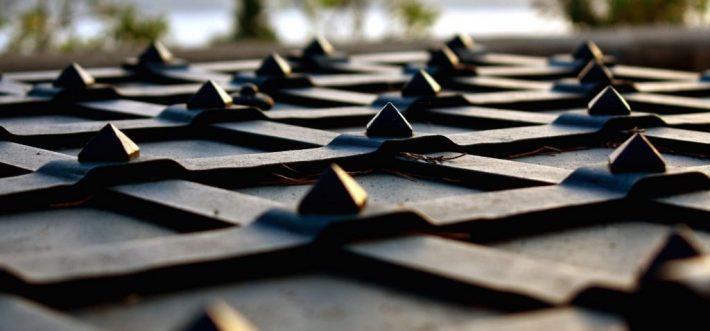
What is pickling
Another technique linked to the improvement of metal surfaces in view of subsequent painting, pickling is a process that causes the surfaces to be cleaned of oxides.
The chemical method called pickling is usually an immersion process, with which the article comes into contact with a solution capable of eliminating surface oxides (calamine, laser oxides, etc.) deriving from the creation activities of the article, due to the high temperatures necessary for the creation of the article itself.
Among the most used acids we find hydrochloric acid, sulfuric acid and hydrofluoric acid, which are also chosen based on the metallic nature of the product to be treated (if it is composed of steel, titanium or aluminium, for example).
When the pieces are deoxidized thanks to pickling they easily undergo oxidation, even just from contact with air. In order to prevent this oxidation, protective agents and/or corrosion inhibitors are added to the pickling solution.
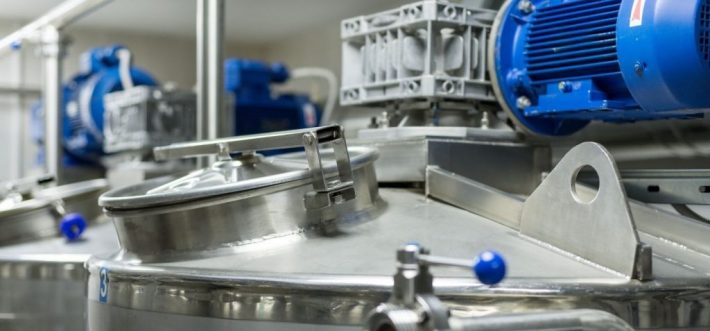
Differences between degreasing and pickling
Degreasing and pickling are often confused, sometimes even considered similar in industrial practice, when in reality they are two very different processes.
With degreasing the cleaning process occurs mainly through emulsion, i.e. through contact between the item to be cleaned and the result of two or more liquids which, when agitated, do not mix homogeneously; in other words, the two components that characterize the mixture are distinguishable even after being combined, and these components trigger physical mechanisms that lead to the cleaning of the surface.
In the second case, that of pickling, actual chemical reactions are induced, which lead to the disintegration of the oxides to be removed and, in part, also to the corrosion of the base surface (which is why the intervention of corrosion inhibitors as "protectors" is required).
In terms of critical issues, the two types of pre-treatment in question can present problems mostly linked to the effectiveness of the management of the industrial process. While degreasing is to be considered more flexible and harmless, as it has no etching capacity (i.e. the ability to remove part of the metal surface), pickling presents greater risks linked to the erosion action which can be triggered by the chemical phenomenon in case of prolonged contact and/or conduction parameters out of range.
Do you want to receive more information? Write to us at info@zoccaratoverniciature.it.
More articles

E-coating or Powder Coating? 3 Factors to Consider Before Choosing
Why does metal corrode? The 7 factors not to be underestimated
Metal cabinets for data centers in a marine environment: why the C5-H cycle is fundamental
Cataphoresis: the questions you didn't know you had (and the answers that make the difference)
Have a project in mind?
Tell us about your needs: our team will guide you to the most suitable treatment.
Contact us