Why Does Paint Peel? 8 Mistakes That Start Before Coating
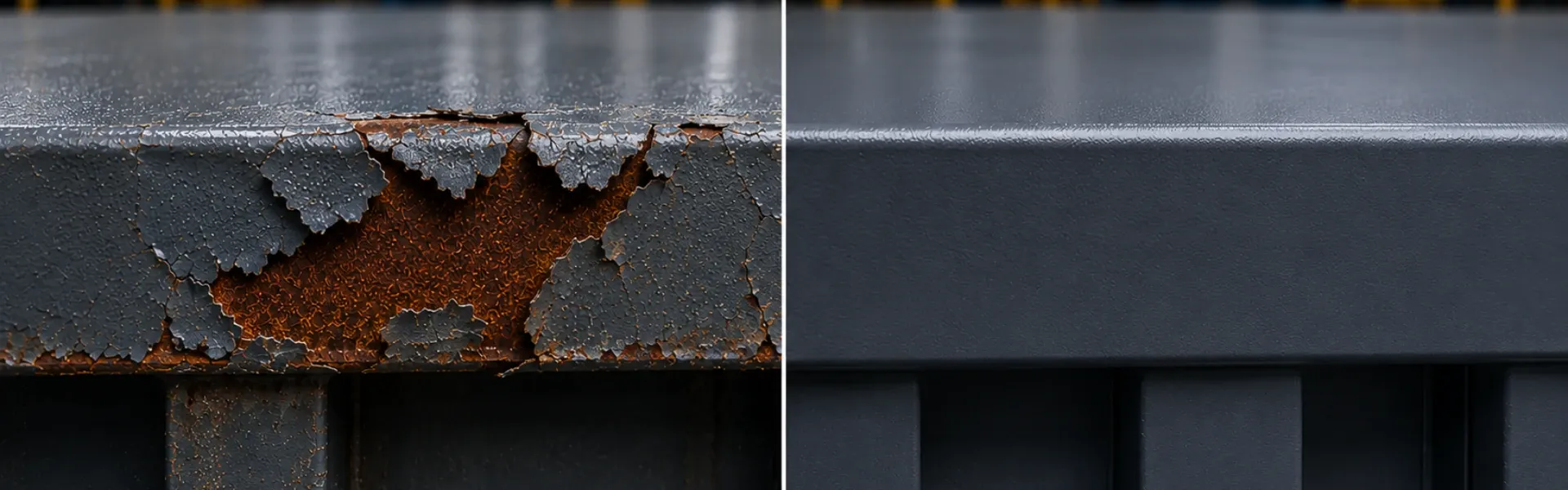
Contact usWhen coating defects occur, the quality of the paint or the final application is often blamed. In reality, many problems originate much earlier.
Delamination, flaking, premature corrosion, blistering and poor adhesion often result from mistakes involving:
· Component design
· Material selection
· Surface preparation
· Previous manufacturing operations
· Component handling
In other words, effective industrial coating starts well before the component enters the spray booth.
Here are eight common mistakes that can compromise the adhesion and durability of an industrial coating system.
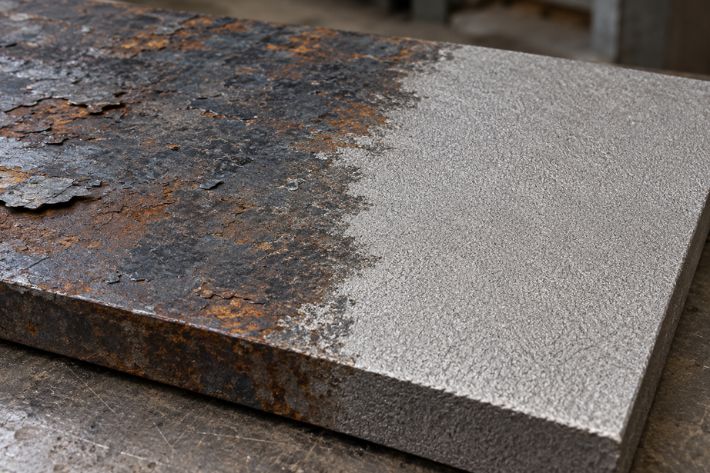
1. Inadequate removal of oxides and mill scale
One of the most common problems is the presence of:
· Oxides
· Mill scale
· Rolling residues
· Oxide layers formed during laser cutting
These materials create an unstable surface that can severely reduce coating adhesion.
Even the best coating system can fail when applied to an inadequately prepared surface.
In many cases, abrasive blasting is an essential step to:
· Improve mechanical keying
· Create a uniform surface
· Remove contaminants that may not be visible
Surface preparation is particularly critical for corrosion protection systems designed for high durability.
2. Sharp edges and challenging geometries
Edges are among the areas most vulnerable to corrosion.
Why is this the case?
During coating, the film naturally tends to become thinner at sharp edges. This results in:
· Reduced coverage
· Lower protection
· A greater risk of premature corrosion
ISO 12944 recognises the fundamental role of component design in the durability of corrosion protection systems.
Appropriate edge radii, chamfers and optimised geometries help improve the quality of the finished coating.
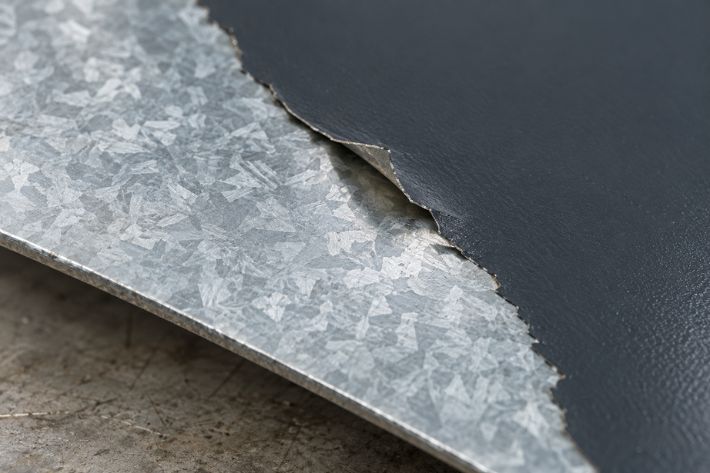
3. Passivated galvanised sheet steel
Galvanising can improve corrosion resistance, but not all galvanised surfaces are equally suitable for coating.
One particularly critical mistake is using passivated galvanised sheet steel without considering its effect on adhesion.
Passivation can create a barrier that impairs:
· Coating anchorage
· Adhesion
· The long-term integrity of the coating system
In industrial applications, particularly those requiring high-performance coating systems, it is essential to check:
· The galvanising process used
· The zinc coating designation
· The presence of any passivation treatment
· Compatibility with the intended coating system
4. Invisible surface contamination
Oils, silicones, grease, manufacturing residues and environmental contaminants can seriously compromise the final result.
The difficulty is that these contaminants are often not immediately visible.
They can cause:
· Cratering
· Delamination
· Blistering
· Appearance defects
· Loss of adhesion
Chemical pretreatment and surface cleaning are therefore essential stages in industrial coating.
5. Inadequately prepared welds
Welds are particularly critical areas.
Residues, weld spatter, porosity and oxidised areas can become initiation sites for corrosion.
Rough or uneven surfaces also make it more difficult to achieve:
· Consistent film thickness
· Uniform coverage
· A continuous protective film
Careful weld preparation is especially important for components intended for:
· Outdoor exposure
· Industrial environments
· Agricultural environments
· High-humidity conditions
6. Holes, cavities and hard-to-reach areas
Component geometry directly affects the quality of corrosion protection.
Cavities, hollow sections, deep folds and enclosed areas can:
· Trap moisture
· Restrict drainage
· Prevent uniform coating coverage
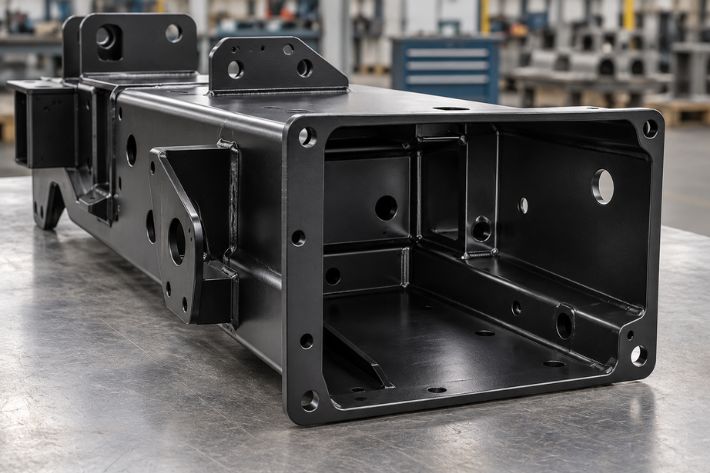
In these cases, e-coating can be a highly effective solution because it can coat complex geometries and areas that are difficult to reach with conventional application methods.
7. Selecting the wrong coating system
No single coating system is suitable for every application.
A common mistake is to select a treatment based solely on its initial cost, without considering:
· The service environment
· Exposure to weathering
· Humidity
· UV radiation
· Chemical exposure
· Expected service life
For example, fabricated steelwork intended for aggressive environments requires a very different approach from a component used indoors.
In many cases, a combination of:
· Abrasive blasting
· E-coating
· Primer
· Powder topcoat
can provide very high levels of protection.
8. Assuming that coating will conceal underlying problems
Coating does not correct structural or surface defects.
In fact, it often makes them more apparent.
Geometrical defects, contamination, incomplete preparation and design errors tend to become apparent over time as:
· Corrosion
· Delamination
· Deterioration in appearance
· Reduced durability
The quality of the finished coating therefore depends on taking the entire process into account.
Durability is established before coating
Effective industrial coating depends on more than the coating material alone.
Above all, it depends on:
· Preparation
· Design
· Process control
· Compatibility between the substrate and the coating system
· Attention to detail
The causes of corrosion often lie beyond the paint itself.
They originate much earlier in the process.
Have a project you would like us to assess?
Every component has different requirements in terms of:
· Corrosion protection
· Appearance
· Durability
· Service environment
At Zoccarato Industrial Coatings, we assess each project to identify the most appropriate coating system for the component’s actual service conditions.
Contact us to discuss the solution best suited to your industrial requirements.
More articles

E-coating or Powder Coating? 3 Factors to Consider Before Choosing
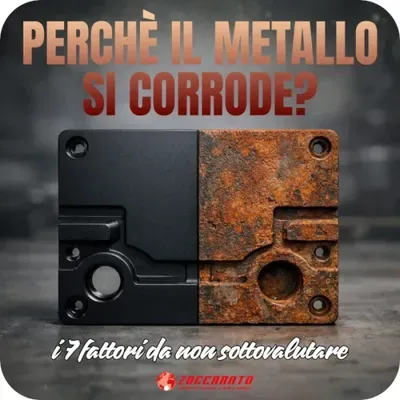
Why does metal corrode? The 7 factors not to be underestimated
Metal cabinets for data centers in a marine environment: why the C5-H cycle is fundamental
Cataphoresis: the questions you didn't know you had (and the answers that make the difference)
Have a project in mind?
Tell us about your needs: our team will guide you to the most suitable treatment.
Contact us