
The use of primer: why it is important and how it is applied
Contact usIndustrial painting processes can improve the aesthetic appearance of products and increase their resistance to corrosion, wear and atmospheric agents. One of the most important phases of painting concerns the use of primer. In this article, we'll look at why primer is important and how it is applied.
The primer is a base paint that is applied to the surface of the piece to be painted before applying the final paint.
The primer has the function of preparing the surface of the piece, increasing the adhesion of the final paint and creating a protective barrier against corrosion and wear.
Furthermore, the primer can also cover any defects or imperfections present on the surface of the piece, making it more uniform and smooth.
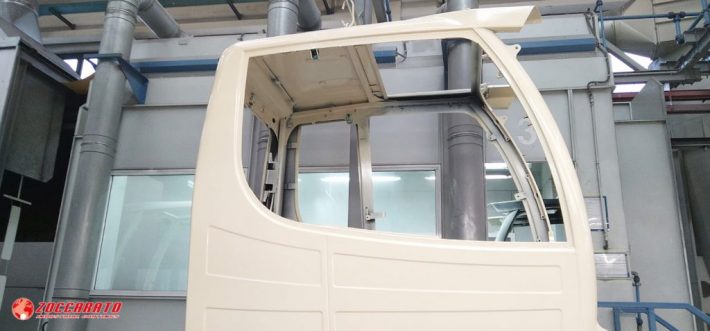
An earthmoving machine cab to which primer has been applied.
The importance of the primer
The importance of using the primer is mainly due to the increase in adhesion of the final paint and the increase in protection from corrosion.
The final paint needs a solid and uniform support to adhere to the surface of the piece effectively. The primer guarantees this uniformity, creating a solid base on which the final paint can adhere optimally.
Furthermore, the primer protects the surface of the piece from any damage that may be suffered by the final paint.
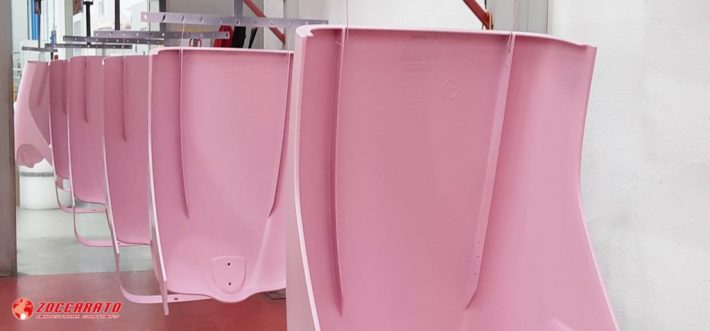
Primer on components for agricultural machinery.
The primer painting phases
Primer painting is an important process to ensure a quality finish to the surface. Here are the three main steps to follow:
Surface preparation: thorough cleaning of the surface to be painted is essential to obtain an optimal result. It is necessary to remove any residue of dirt, rust, oxidation or other impurities present on the surface of the product.
Primer application: Once the surface is prepared, the primer is applied. Spraying, brushing or immersion techniques can be used, depending on the needs and type of surface. The primer creates a uniform base for the final paint, improving the adhesion and durability of the coating.
Surface finishing: after applying the primer, the surface is finished and prepared for the application of the final paint. Finishing includes the removal of irregularities or any imperfections present on the surface, in order to obtain a smooth and uniform surface.
Primer painting carried out following these phases allows you to obtain a resistant and long-lasting finish.
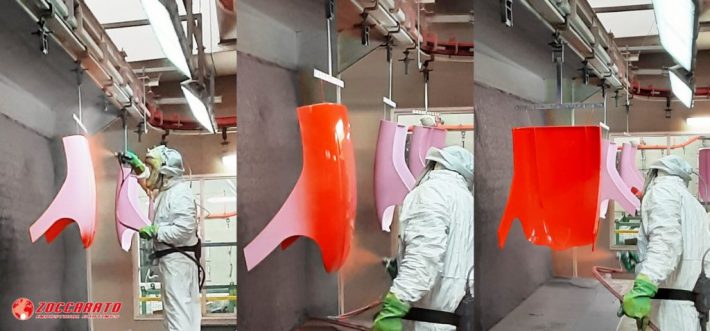
Components for agricultural machinery liquid painted red after a previous application of primer.
Choosing the right type of primer
The choice of the type of primer to use to paint a piece depends on a series of critical factors which include the technical specifications of the material, its composition and its intended use in the reference industry. In particular, there are different types of primers to choose from, each of which has unique and distinct characteristics and advantages.
For example, epoxy primers are known for their high resistance to corrosion and wear, as well as their long life. These primers are ideal for applications in aggressive or corrosive environments, such as in the chemical, petrochemical and maritime transport industries. They can be applied by spray (in liquid or powder form) or by immersion (such as cataphoresis, galvanizing, etc.).
On the other hand, acrylic primers are known for their ease of use and quick drying, making them ideal for applications where working time is limited. These primers are often used in the furniture and furnishings industry, as well as in the printing and graphics industry. Recently they have also found space in applications on products intended for external use.
In any case, the choice of the type of primer best suited to the needs of the piece to be painted always depends on an accurate evaluation of the critical factors and specifics of the application. Some of the parameters that can influence the choice include operating temperature, humidity and the presence of aggressive chemicals in the surrounding environment.
It is therefore important to carefully consider all these variables and choose the primer that can provide the best performance for the specific application.

Conclusions
In conclusion, the use of primer is an important phase of industrial painting for third parties. The primer prepares the surface of the piece, increases the adhesion of the final paint and better protects the surface from damage.
Primer painting is performed in three main stages: surface preparation, primer application and surface finishing. The choice of the type of primer to use depends on the specifications of the piece and the needs of the industry in which it is used. Primer painting is therefore a critical phase of industrial painting for third parties.
More articles

E-coating or Powder Coating? 3 Factors to Consider Before Choosing
Why does metal corrode? The 7 factors not to be underestimated

Metal cabinets for data centers in a marine environment: why the C5-H cycle is fundamental
Cataphoresis: the questions you didn't know you had (and the answers that make the difference)
Have a project in mind?
Tell us about your needs: our team will guide you to the most suitable treatment.
Contact us