How to prevent metal corrosion
Contact usPreventing corrosion is fundamental, because it not only allows you to save money and keep metal articles efficient, but also to safeguard people's health. In this article we analyze what is meant by corrosion and what techniques can be adopted to ensure that it does not occur.
What is metal corrosion?
Are some metals more prone to corrosion?
Why and how does corrosion occur?
Is there a way to prevent metal corrosion?
Use a protective coating against corrosion
Metal corrosion is a serious problem, just think of the fact that its annual cost worldwide amounts to more than 3% of global GDP.
When it occurs, corrosion represents a major threat: buildings, bridges, vehicles, industrial machines, instruments, everything that is composed of metals can be affected, which means that corrosion endangers the safety of people because it leads to the degradation of the article that is affected by it.
From this point of view, preventing metal corrosion is an essential objective because on the one hand it allows you to save money, on the other it allows to all intents and purposes to preserve health and save human lives.
Let's see together what corrosion is and what are the best techniques for preventing metal corrosion, to protect you and those around you.
What is metal corrosion?
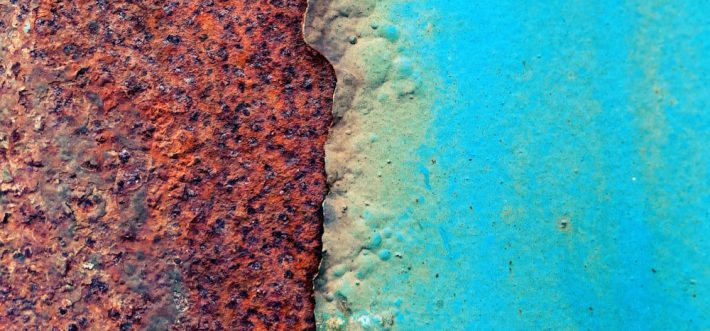
Simply put, corrosion is the process by which a metal deteriorates by interacting with the surrounding environment, such as air and water. The speed and degree of this deterioration depends on several factors, including the type of metal and environmental conditions.
For metal corrosion to occur, three main conditions are necessary:
Humidity (with electrolyte function);
an exposed metal surface;
an oxidizing agent (like air, with the function of electron acceptor).
When iron and steel corrode, the resulting oxide is commonly known as rust. Fortunately, there are several solutions that can be adopted to minimize corrosion.
Are some metals more prone to corrosion?
Some metals are more susceptible to corrosion than others, such as pure iron. But all metals are subject to this type of process.
Rust is a particular type of oxidation that occurs only with a ferrous metal (which contains iron). Some frequently used ferrous metals are cast iron, carbon steel, and stainless steel. Other metals that do not contain iron can corrode but not rust.
Preventing corrosion starts with choosing the right metal for the situation in question. Since some metals are more resistant to corrosion, such as stainless steel, they must be carefully evaluated if, when and where they should be used. Generally speaking, more "extreme" use situations should lead to the choice of more resistant metal alloys.
The reason why stainless steel alloys are very resistant to rust is the high percentage of chromium they are composed of; Chromium oxidizes very quickly and creates a layer of chromium oxide on the surface of the metal. This way, it prevents oxygen from reaching the steel underneath.
The case of metals such as gold, silver, platinum, palladium, ruthenium, rhodium, osmium and iridium is even different: these are a small group of noble metals characterized by an extraordinary resistance to corrosion.

Why and how does corrosion occur?
For steel to corrode, humidity must be present: oxidation occurs when iron is exposed to rain and humidity in the air, salt water or aggressive chemicals. Metal and moisture react with oxygen and form rust.
This is why steel corrodes more slowly in dry or slightly humid climates. For this reason, in humid and rainy climates, protecting metals is vital.
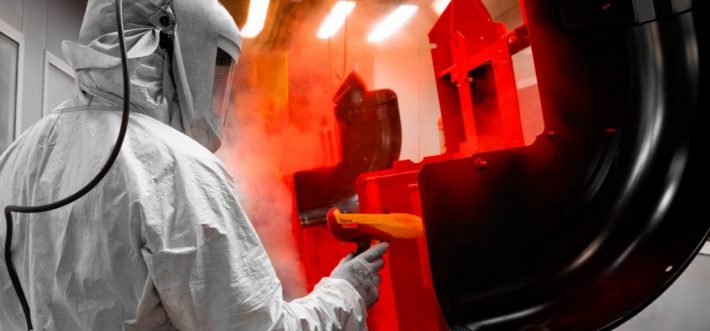
A phase of the powder coating process
Is there a way to prevent metal corrosion?
Metal corrosion is a reality that everyone who uses metal must face. Knowing the causes of corrosion is the first step in understanding what can be done to prevent it.
We have seen that there are three factors for corrosion to occur: an electrolyte (water, humidity), an exposed metal and an electron acceptor (air).
Metal corrosion is prevented by eliminating one of these conditions.
For example, coating a metal surface provides a barrier between the metal and ambient moisture. This coating can be achieved for example by cataphoresis, galvanizing, powder painting and liquid painting.

An article is introduced into our tank for cataphoresis treatment
Use a protective coating against corrosion
One of the most effective ways to prevent corrosion and rust is to protect metal items through industrial painting: it is a very effective method that places a barrier between the metal and environmental humidity and oxygen.
The higher the quality of the coating, the greater the protection. Zoccarato Industrial Coatings has been providing high quality industrial coatings for 60 years, including cataphoresis, powder and liquid painting.
We are a company capable of offering a complete cycle, which includes both cataphoresis and powder and/or liquid coating. This factor is very important, because if cataphoresis and powder coating are used together they can create an optimal and extremely long-lasting coating, with unparalleled resistance to corrosion.
Corrosion is a serious problem, but as often happens with many problems there are also excellent solutions.
Do you want to receive more information? Write to us at info@zoccaratoverniciature.it
1. The above case does not include galvanic corrosion, which occurs when two metals, having a different nobility value, are placed in direct contact in the presence of an electrolyte on both.
More articles

E-coating or Powder Coating? 3 Factors to Consider Before Choosing
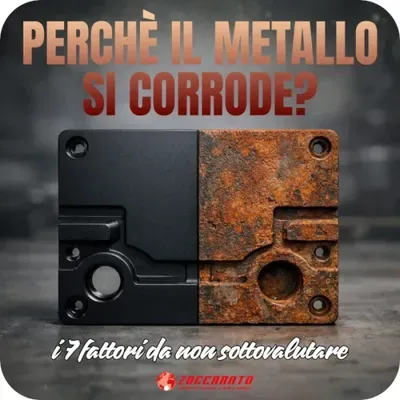
Why does metal corrode? The 7 factors not to be underestimated
Metal cabinets for data centers in a marine environment: why the C5-H cycle is fundamental
Cataphoresis: the questions you didn't know you had (and the answers that make the difference)
Have a project in mind?
Tell us about your needs: our team will guide you to the most suitable treatment.
Contact us