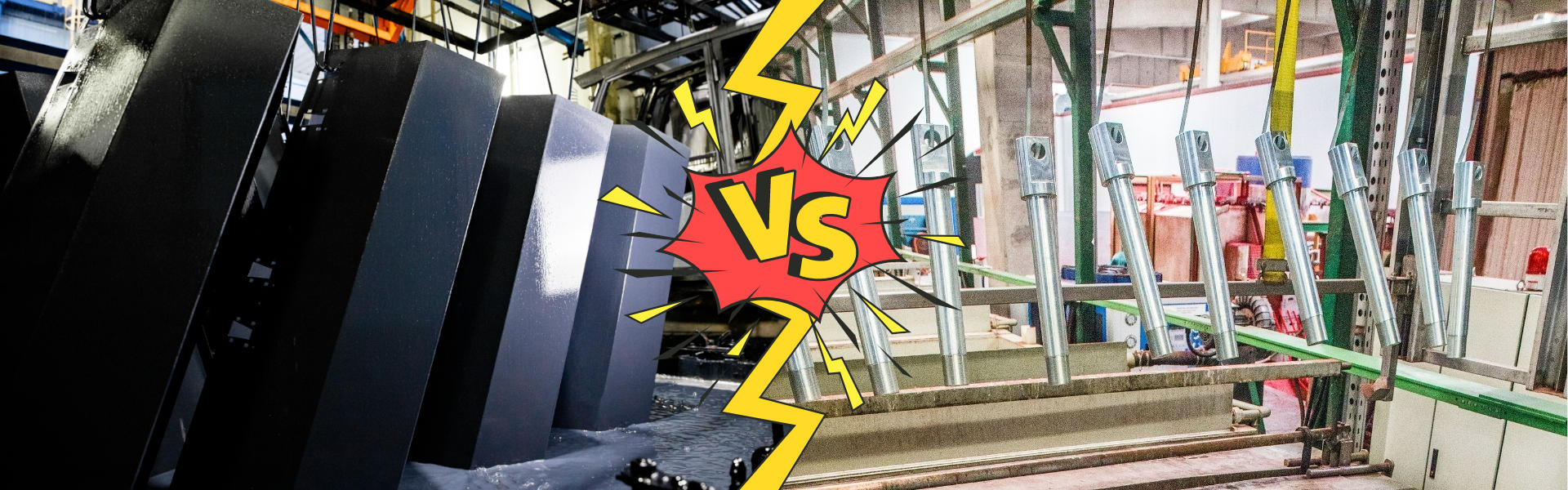
Corrosion treatments: what to choose between cataphoresis and galvanizing?
Contact usCataphoresis and galvanizing represent the best treatments to protect metals from corrosion and external agents. But the question arises spontaneously: which one to choose?
Let's try to clarify a much debated topic: when we think about the protection of metals against external agents, corrosion and oxidation, we often wonder whether it is better to rely on cataphoresis treatment or galvanizing.
We know well that choosing the right surface treatment is important for the final performance of a product and therefore the protective treatment also plays a leading role, as it guarantees that the characteristics of an item do not fail due to the action of time and external agents.
This brief introduction does not clarify the debate: is it better to choose cataphoresis or galvanizing? Let's see it together.
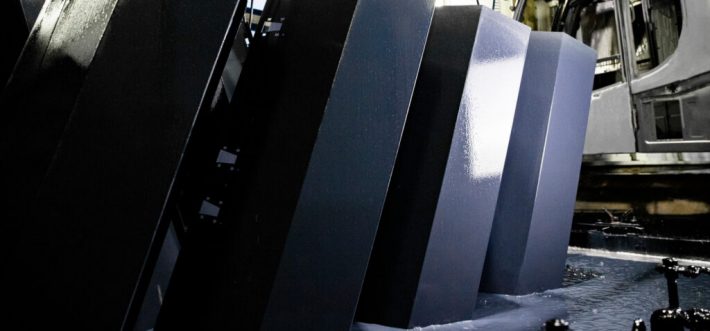
Cataphoresis painting: what it is, how it works and strengths
Let's start with a basic concept: cataphoresis is a treatment that allows you to protect metal articles (only metal and metal alloys!) against corrosion and oxidation.
For the process to be successful, it must be made up of several levels, including degreasing phases, which are crucial for high detergency and final cleaning of the products before painting, cleaning and pre-treatment. In these initial phases, alkaline solutions, mains water, phosphating with zinc salts, demi and passivation ensure that the products are prepared for the actual cataphoresis treatment.
At the end of these "preliminary" steps, the actual cataphoresis treatment takes place: in short, it is an electrodeposition process with which the artefacts, previously connected to the negative pole of an electric generator, are immersed in a large tank where electrodes connected to the positive pole are also immersed. The electric field that develops gives rise to electrochemical phenomena that cause the paint to deposit on the article.
Finally, before entering the drying oven, the articles are further rinsed with the ultrafiltrate, the liquid part of the bath from which the pigmentation is removed.
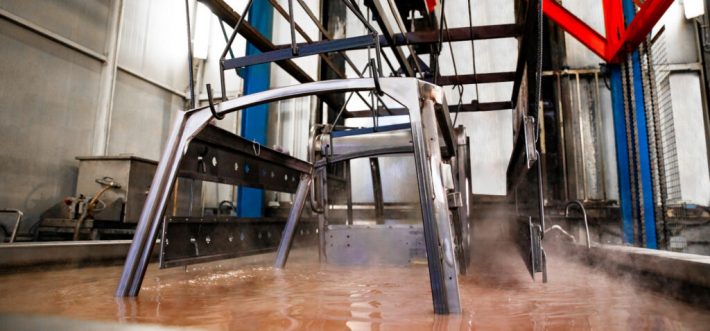
As already mentioned, being a cathodic treatment by electrodeposition, it can only be carried out on metallic articles and, among the positive factors, note that cataphoresis allows better adhesion of subsequent finishing paints, if required.
Also for this reason it is a treatment closely linked with some of the most demanding product sectors: automotive, agricultural machinery, earthmoving and material machinery, nautical and furniture, just to name a few.
It is a complex process that requires a high level of precision, experience and professionalism, but which has no equal in the final result: it is no coincidence that cataphoresis is used for articles that must operate in extreme conditions and resist for many years before giving in to wear, thus increasing their quality and value.
Cataphoresis painting: the advantages
The excellent coverage of edges, corners and openings present in the articles;
It is the only process that allows complete coverage of the articles, even in the smallest cavities;
The coating has perfect adhesion and has no pores;
Aesthetic perfection of the treated artefact;
Very high barrier and protection properties;
Almost zero use of solvent;
Optimal control of the paint thickness;
Used as a primer treatment, it allows excellent adhesion of subsequent finishing paints;
It gives the parts high resistance to corrosion, up to 700 hours according to ISO 9227;
Ideal for the most demanding sectors, such as automotive, agricultural and industrial machinery, nautical, furniture;
It is a highly automatable system;
Ideal for large productions of uniform items.
Cataphoresis painting: the disadvantages
The treatment plants and their maintenance are very complex;
Large initial capital to start the plant;
Little flexibility: generally each tank can manage a single color.
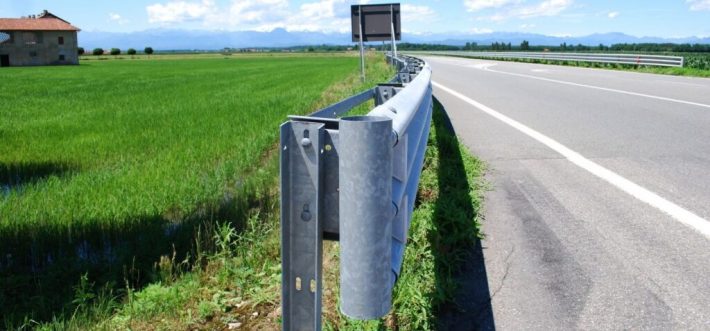
Galvanizing: a sacrificial treatment against oxidation
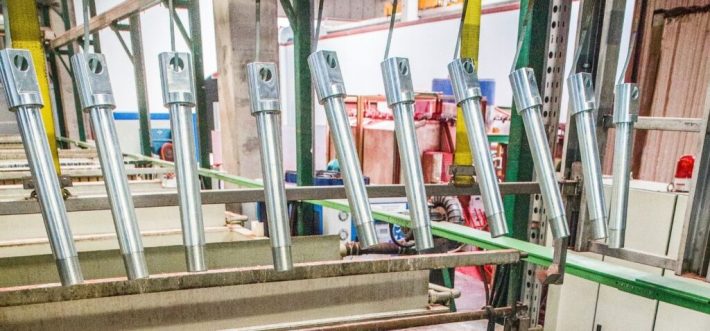
Galvanizing (sometimes incorrectly also called galvanization) is a substantially different process, whereby a zinc coating is applied to a metal article to protect it from corrosion.
From a conceptual point of view, we can think of cataphoresis as a surface painting that places a protective barrier between the article and external agents, while galvanizing as a "sacrificial" treatment.
We use this term because, in the event that the substrate was in contact with the external environment (for example due to a defect or a scratch), the substrate would still be protected as the zinc will sacrifice itself for it and will be the first to oxidize.
The steps that typically involve galvanizing include an initial treatment of degreasing and rinsing, pickling, fluxing with application of a protective film on the surface (useful to prevent oxidation of the article before immersion in molten zinc), oven drying and immersion in a tank in which the molten zinc is present. Lastly, cooling takes place in air or water.
Galvanizing: the advantages
Low costs;
Easily manageable treatment plants;
High resistance against corrosion;
It is also a process that can be easily automated.
Galvanizing: the disadvantages
The disadvantages of galvanizing are mainly linked to the possible defects of the treated surface, deriving from the processing itself or subsequent storage, including:
Irregular surface: if the item to be treated has manufacturing defects, galvanizing makes them even more visible, or if the zinc layer is very thick it can give rise to roughness, as well as if the treated steel contains high percentages of phosphorus or silicon.
Hard nodules on the surface: caused by the agitation of the waste at the bottom of the tank. The item is still protected from oxidation, but will have an aesthetic problem.
Presence of white or gray stains: if excessive humidity conditions form during transport or storage of the treated article, stains caused by zinc oxides and hydrates (white rust) could form. This is a very visible damage, immediately visible to the naked eye, and if the humidity were to be very intense it could lead to local destruction of the zinc coating.
Conclusions
Ultimately, each of the two treatments has its own strengths and weaknesses, and in our opinion it is necessary to choose based on the item to be treated.
If the value of the item is not the highest and aesthetic perfection is not fundamental, perhaps it is better to opt for galvanizing: it is a valid and functional solution, historically consolidated and at a lower cost, also capable of protecting metal articles from oxidation and external agents.
Otherwise, if you are looking for a very high quality treatment, especially for items of significant value and which must appear aesthetically perfect, the best choice is cataphoresis. In addition to protecting the item with a pre-treatment with zinc salts, it deposits a further "barrier" with the actual cataphoresis painting, significantly extending the life cycle of the treated products.
More articles

E-coating or Powder Coating? 3 Factors to Consider Before Choosing
Why does metal corrode? The 7 factors not to be underestimated
Metal cabinets for data centers in a marine environment: why the C5-H cycle is fundamental
Cataphoresis: the questions you didn't know you had (and the answers that make the difference)
Have a project in mind?
Tell us about your needs: our team will guide you to the most suitable treatment.
Contact us