
The importance of cataphoresis for resistance to mechanical stress
Contact usWhen it comes to protecting metal objects and ensuring excellent durability, cataphoresis proves to be an indispensable solution. Through this article, we will explore how cataphoresis works and how it offers exceptional resistance to mechanical stress, providing reliable and long-lasting protection. We will discover the advantages of this technique in industrial painting and how it can contribute to the success of applications that require reliable and durable performance over time.
Industrial painting plays a crucial role in the aesthetics and above all in the protection of metal objects. When it comes to applications that require exceptional resistance to mechanical stress, cataphoresis (or cathodic electrodeposition) emerges as a reliable solution. In this article, we will explore the importance of cataphoresis in the world of industrial painting, focusing on its ability to offer great resistance to mechanical stress.
1. Introduction to cataphoresis
Cataphoresis is an advanced industrial painting process that involves the use of an electric charge to uniformly apply a layer of paint to a metal object. During the process, the object is immersed in an electroconductive solution containing the paint, and electric current is applied to attract the paint particles to the object to be treated. This electrostatic application method achieves uniform coverage, including uneven areas and innermost cavities, ensuring complete protection.
2. Resistance to mechanical stress
One of the distinctive characteristics of cataphoresis is its exceptional resistance to mechanical stress. Thanks to the electrodeposition process, the cataphoretic coating bonds firmly to the metal surface, creating a continuous and adherent coating. This coating offers effective protection against corrosion and at the same time is able to withstand intense mechanical stress.
When an object painted with cataphoresis is subjected to external forces such as impacts, vibrations or deformations, the cataphoretic coating demonstrates its resistance. It is able to adapt to stress without compromising the integrity of the coating itself, limiting breakages and cracks. This makes it ideal for industrial applications where the painted object is subject to frequent movements or mechanical stress situations.
Below, some data regarding the mechanical resistance properties relating to cataphoresis:
TEST
REGULATIONS
PERFORMANCE
Pencil hardness
ASTM D3363-92A
5H+
Hardness Pers
ISO 1522
>300
Direct Impact Resistance
NFT 30-017
1 KG / 1 m
Bending resistance
ISO 6860
With conical mandrel, no cracks (as per photo below)
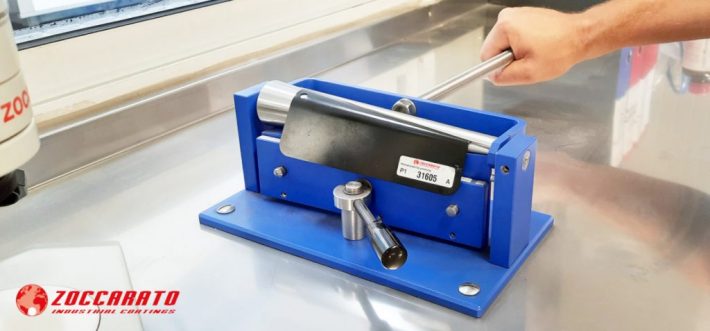
Bending test with conical mandrel on cataphoresis-treated sheet metal.
3. Advantages of cataphoresis against mechanical stress
The resistance to mechanical stress offered by cataphoresis brings a series of significant advantages:
Durability: Cataphoresis helps to improve the durability of the painted object, allowing the integrity of the coating to be maintained even in aggressive environments or adverse atmospheric conditions.
Anti-corrosion protection: The resistance of cataphoresis to mechanical stress goes hand in hand with its ability to provide effective protection against corrosion. This helps extend the life of the painted object and reduce maintenance costs.
Adaptability to complex shapes: Cataphoresis manages to uniformly cover irregular surfaces, hidden areas and cavities, guaranteeing complete protection on the entire painted object, thanks to its immersion process.
Application versatility: The mechanical stress resistance of cataphoresis makes it suitable for a wide range of industrial applications, including automotive components, industrial machines and equipment, and objects subject to frequent movement and manipulation.

4. Conclusions
Cataphoresis is an industrial painting process that offers excellent resistance to mechanical stress. Thanks to its ability to adapt to external forces without compromising the integrity of the coating, cataphoresis guarantees the protection and durability of painted objects.
The resistance to mechanical stress of cataphoresis contributes to its growing popularity in various industries, offering high-quality painting solutions for applications requiring reliable and durable performance.
More articles

E-coating or Powder Coating? 3 Factors to Consider Before Choosing
Why does metal corrode? The 7 factors not to be underestimated

Metal cabinets for data centers in a marine environment: why the C5-H cycle is fundamental
Cataphoresis: the questions you didn't know you had (and the answers that make the difference)
Have a project in mind?
Tell us about your needs: our team will guide you to the most suitable treatment.
Contact us