


The phases of the treatment
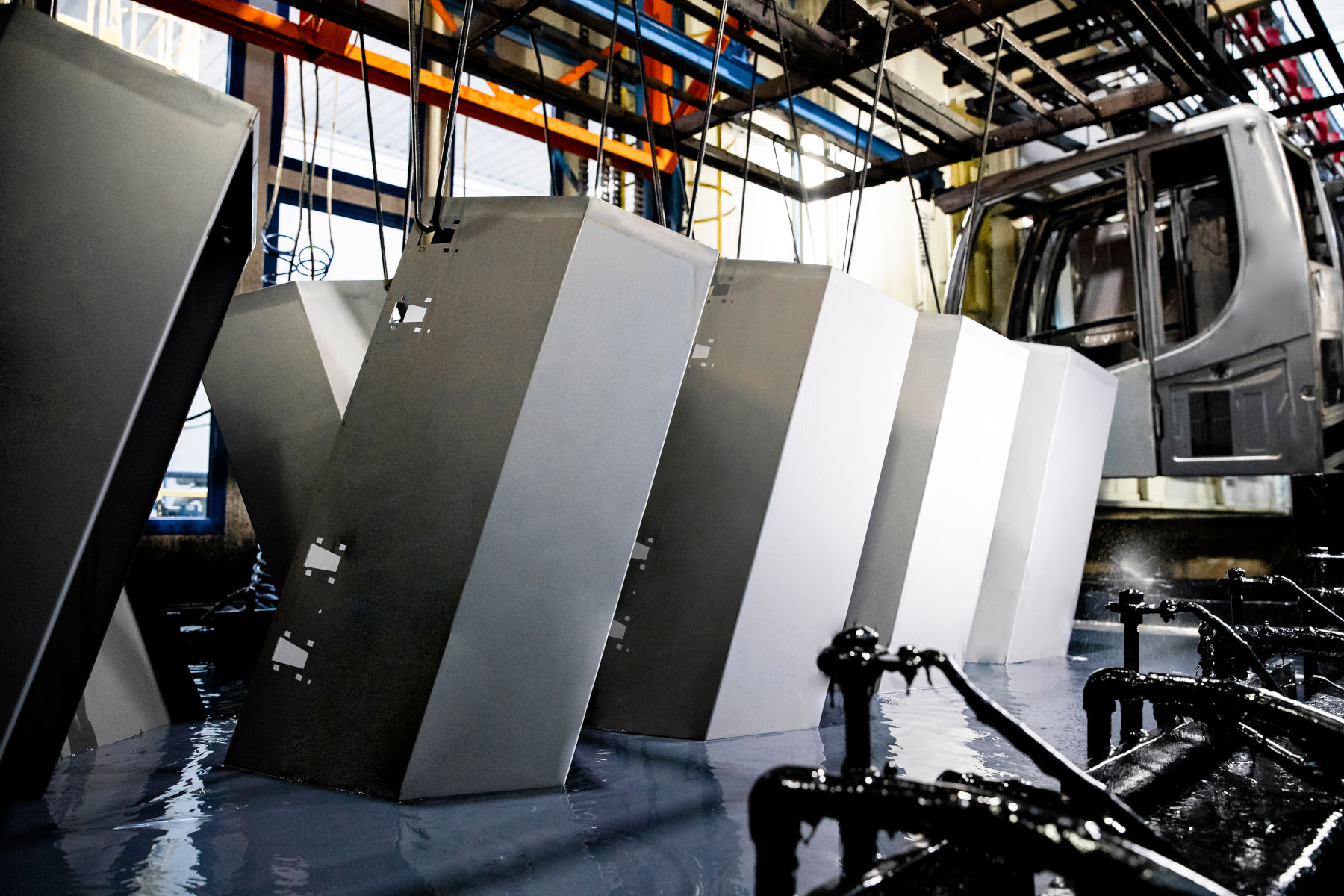
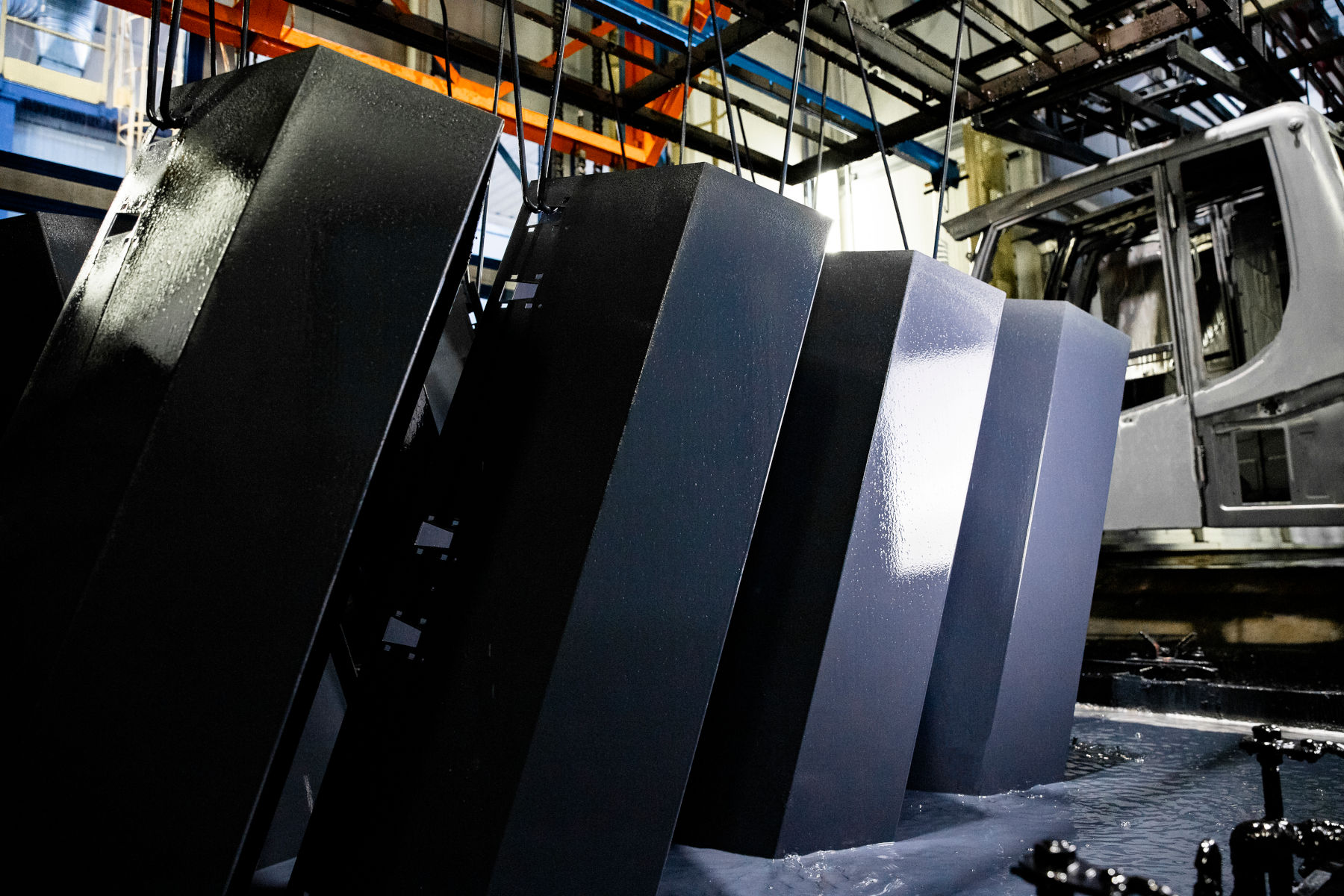
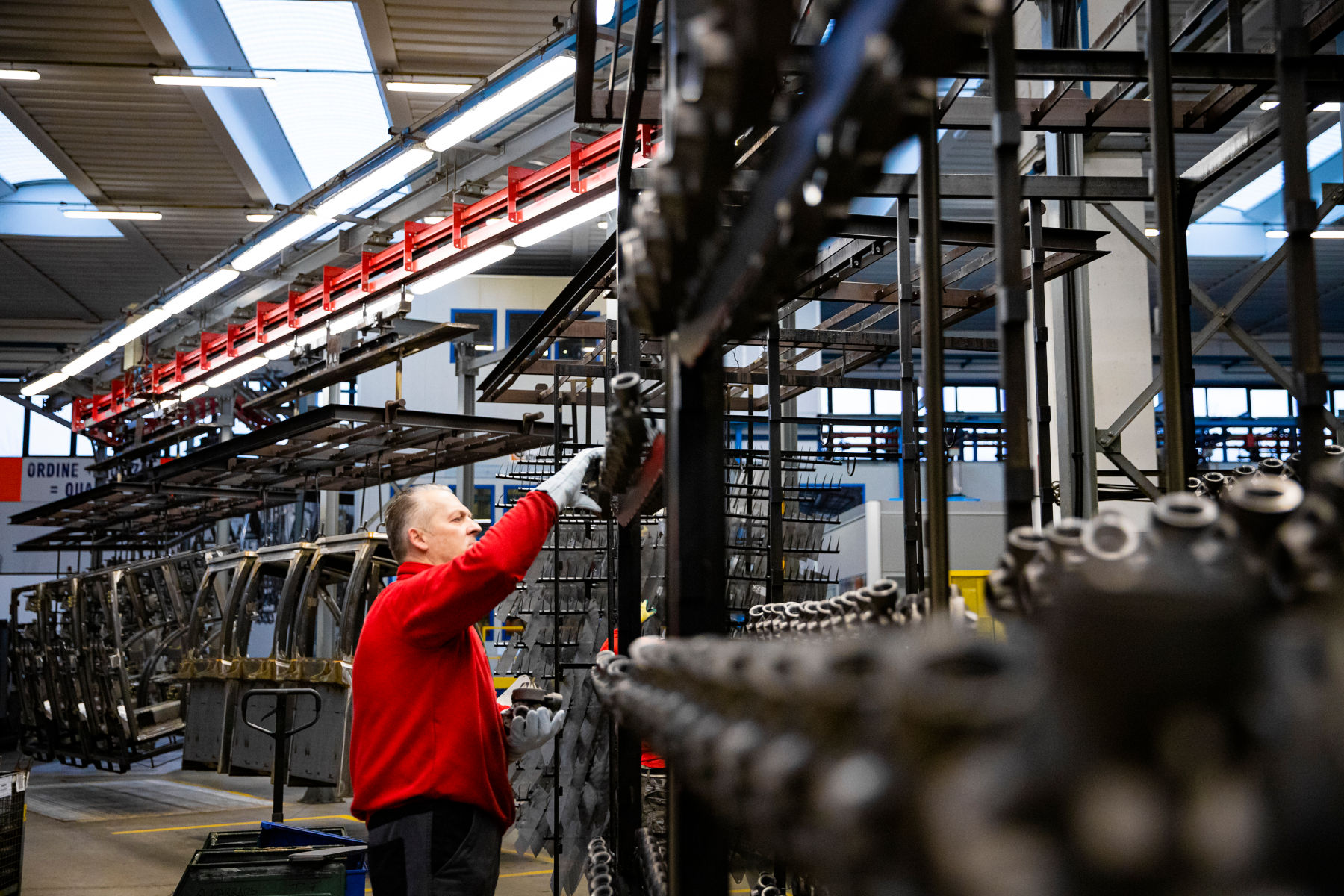
The process consists of several phases:
- Pretreatment: degreasing, zinc phosphating, passivation.
- Cataphoretic coating: the parts, connected to the negative pole, are immersed in a tank with electrodes at the positive pole, where the electric field drives the deposition of the paint.
- Rinsing with ultrafiltrate: to recover the liquid and minimise losses.
- Oven curing: the paint is permanently fixed at high temperature.
E-coating protects against corrosion and rust.
Added value for every component
The e-coating treatment is essential for parts exposed to critical environmental conditions such as water, salt, snow, sun, wind and chemical agents. It protects surfaces from oxidation and rust, extending the service life and the value of the product.
It is not just an aesthetic finish but an essential technical treatment, required by industrial specifications in the most demanding sectors:
- Automotive and industrial vehicles
- Agricultural and earthmoving machinery
- Marine and shipbuilding
- Furniture and metal fabrication
After years of refinement, our plant is today one of the largest in Europe for production capacity and treatable dimensions, while maintaining a consistently high quality standard.
Why choose Zoccarato Industrial Coatings
- Certified processes, compliant with the main technical specifications
- Integration with powder and liquid coating
- Full traceability and advanced quality control
- Many years of experience in contract coating for the main industrial sectors
Request information
Contact us for a free technical consultation or a tailored quote.
E-coating FAQ.
- What is e-coating?
- An immersion coating process in which the paint is deposited by means of an electric current, guaranteeing high corrosion resistance.
- Which materials can be treated?
- Mainly steel, iron, cast iron, aluminium and other conductive metal alloys.
- Can e-coating be combined with other treatments?
- Yes, it is often used as a primer before powder or liquid coating.
- How thick is the cataphoretic film?
- Between 15 and 30 μm, uniform even on complex geometries.
- Is it an eco-friendly process?
- Yes, e-coating uses water-based paints and produces limited emissions.